For coffee connoisseurs, small business owners, and bustling households across Amarillo, TX, a premium espresso machine or coffee maker is far more than a basic kitchen appliance—it is a daily necessity. From high-end domestic espresso machines (like Breville, DeLonghi, Jura, Saeco, Gaggia, and Rancilio) to commercial espresso group heads, these intricate machines combine high-pressure water pumps, precision thermal boilers, electronic PID controllers, and 3-way solenoid valves to craft rich, golden espresso shots.
However, when scaling, worn gaskets, or electrical faults strike, your morning routine grinds to a halt. In this technical maintenance and repair guide, our master coffee equipment repair technicians at Appliance Repair Amarillo TX break down how espresso machines work, reveal the top 6 mechanical failures, provide step-by-step cleaning routines, and explain when to seek professional repair.
How Modern Espresso Machines Work
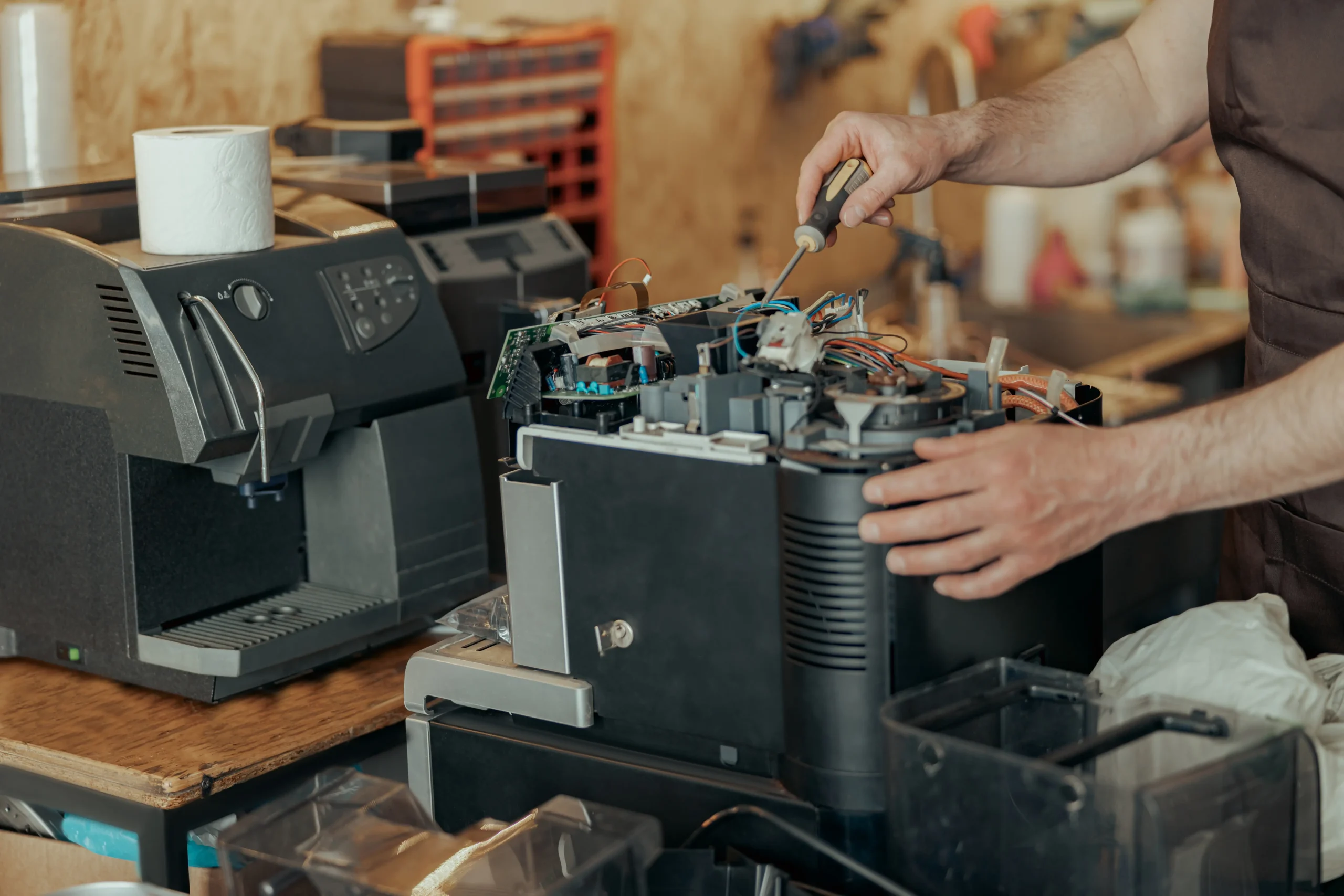
To diagnose why an espresso machine is leaking, failing to build pressure, or outputting lukewarm coffee, it helps to understand its key internal components:
- Vibration or Rotary Pump: Generates 9 to 15 bars of hydraulic water pressure required to extract coffee oils from finely ground beans.
- Thermoblock or Steam Boiler: Heats water precisely to ideal extraction temperatures (195°F – 205°F) for espresso brewing and 250°F+ for steam production.
- Group Head & Shower Screen: Distributes pressurized hot water evenly across the compacted coffee puck inside the portafilter basket.
- 3-Way Solenoid Valve: Relieves residual brewing pressure instantly when extraction finishes, preventing messy portafilter “sneeze” and wet coffee pucks.
- PID Temperature Controller & Thermistors: Electronic sensors that maintain tight digital control over water temperatures within half a degree.
The Top 6 Espresso & Coffee Machine Problems & Diagnostics
1. No Water Flow / Choked Group Head (Limescale Buildup)
In the Texas Panhandle, tap water contains elevated levels of dissolved calcium and magnesium (hard water minerals). As water boils inside thermoblocks and boilers, these minerals crystallize into hard limescale deposits.
Over months of use, limescale chokes off tiny 0.5mm orifice jet nozzles inside 3-way solenoid valves and group head passages. Water cannot reach the coffee puck, causing the pump to strain loudly without yielding any espresso.
Fix: Regular descaling using food-grade citric or sulfamic acid solutions dissolves scale. In severe cases, a technician must disassemble solenoid valves and physically clear mineral blockages.
2. Water Leaking Around the Portafilter Handle
If water drips down the outside of your portafilter handle during extraction, the rubber group head gasket (group seal) inside the brew head has hardened, cracked, or accumulated baked-on coffee oils.
Standard rubber group gaskets last 12 to 18 months under high heat and pressure. Replacing a worn rubber gasket with a durable food-grade silicone group gasket restores a leak-free seal.
Learn more about our specialized coffee machine repair in Amarillo.
3. Low Steam Wand Pressure & Weak Milk Frothing
Weak steam output or milk being sucked backward into the steam wand is caused by two common issues:
- Dried milk residue clogging the micro-holes at the tip of the steam wand steam nozzle.
- Heavy mineral scale insulating the steam boiler heating element, preventing proper steam pressure buildup (should read 1.1 to 1.3 bar on steam pressure gauges).
Fix: Soak the steam tip in hot water with milk-protein remover solution, and perform a deep boiler descaling cycle.
4. Loud Vibrating Pump Noise with Zero Pressure
If your espresso machine’s vibration pump makes a harsh buzzing sound but fails to draw water from the reservoir, the pump has developed an air lock or its internal rubber check-valve ball has seized dry.
Fix: Priming the pump using a small water syringe forced directly into the intake tube forces out air bubbles and restores pump prime.
5. Espresso Tastes Bitter, Sour, or Output Temperature Is Too Low
Extraction temperature dictates coffee flavor balance:
- Too Cold (<190°F): Causes under-extraction, resulting in sour, watery, thin espresso.
- Too Hot (>206°F): Scalds coffee grounds, causing harsh, astringent, bitter flavors.
When coffee temperature fluctuates wildly, the thermal fuse, NTC temperature thermistor, or PID control logic board requires replacement and calibration.
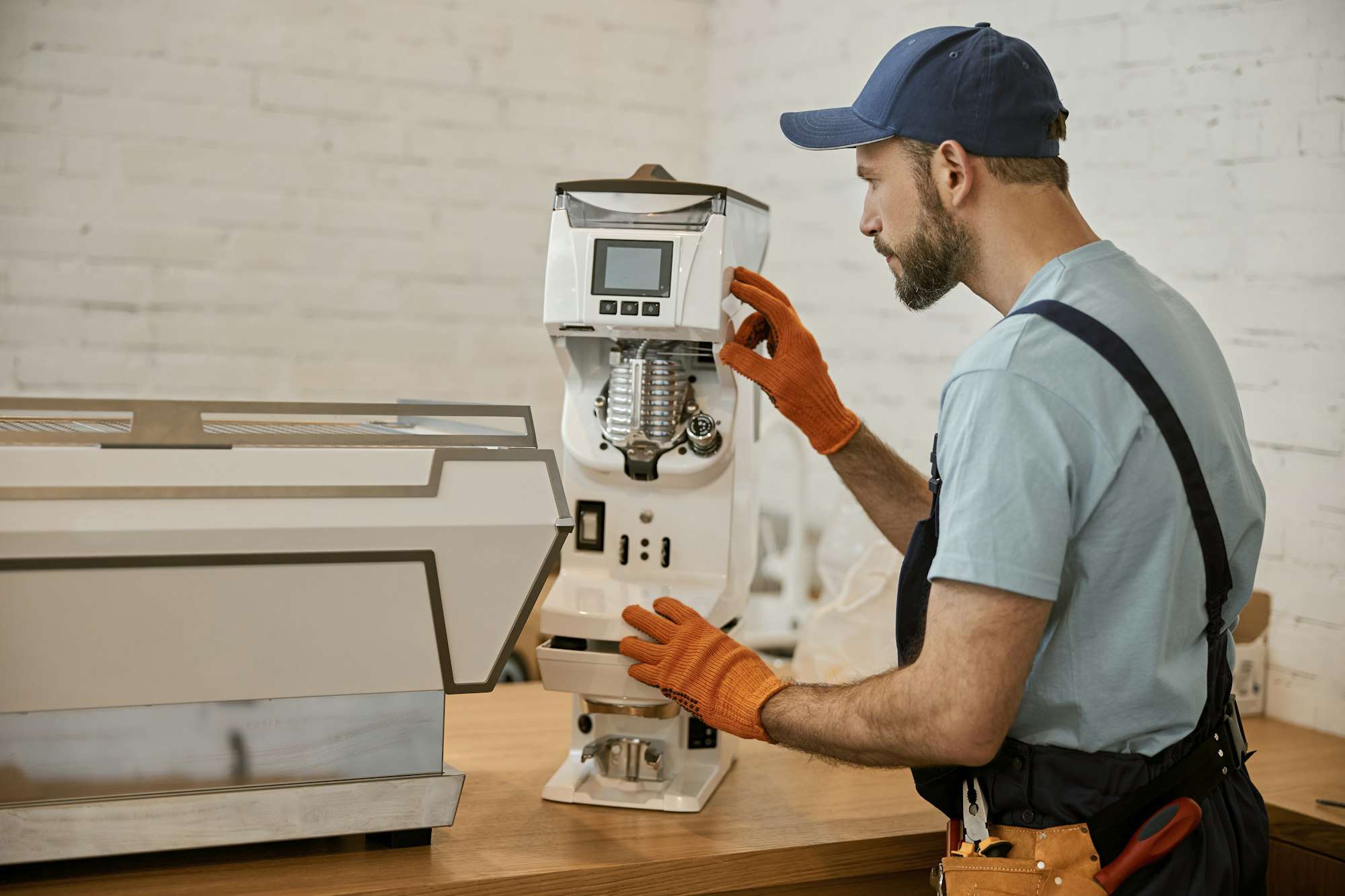
6. Integrated Burr Grinder Jammed or Not Spinning
Many modern automatic machines (such as Breville Barista Touch or Jura Gigafine units) feature built-in conical burr grinders. Lightly roasted oily beans, small stones, or moisture entering the bean hopper can jam the hardened steel burrs.
If the grinder hums without spinning, turn off power immediately to avoid burning out the grinder motor drive gear.
Recommended Maintenance Schedule for Coffee Equipment
| Frequency | Required Maintenance Task | Purpose / Benefit |
|---|---|---|
| Daily (After Use) | Purge steam wand; wipe down group head & shower screen | Prevents milk bake-on and coffee oil buildup |
| Weekly | Backflush group head with blind basket & detergent tablet | Cleans 3-way solenoid valve & internal brew passages |
| Every 2–3 Months | Full chemical descaling cycle; replace water filter cartridge | Dissolves mineral limescale and protects heating thermoblocks |
| Annually | Replace group head rubber gasket & shower screen mesh | Ensures 100% water-tight extraction pressure |
Brands Serviced Across Amarillo, TX
Our technicians specialize in diagnosing and repairing all major espresso and coffee equipment brands, including:
- Breville: Barista Express, Barista Touch, Dual Boiler, Oracle Touch
- DeLonghi: Magnifica, Specialista, Dinamica, Eletta
- Jura: E8, S8, Z10, IMPRESSA commercial espresso line
- Saeco & Gaggia: Classic Pro, Anima, Brera, Babila
- Rancilio & La Marzocco: Silvia, Micra, Mini, commercial 2-group units
- Bunn, Keurig & KitchenAid: Commercial drip brewers and pod machines
Explore our complete list of brands we service.
Professional Coffee Machine Repair in Amarillo, TX
If descaling or changing your group gasket doesn’t restore your coffee machine to peak 9-bar performance, trust the master appliance repair technicians at Appliance Repair Amarillo TX.
We carry genuine OEM pumps, solenoid valves, heating elements, thermistors, and silicone gaskets to complete repairs quickly. Contact us today for fast, reliable espresso and coffee machine repair across Amarillo, Canyon, and Bushland TX.