
Few domestic discoveries cause immediate panic quite like opening your kitchen refrigerator to retrieve fresh milk or produce, only to realize the interior feels lukewarm while the ice cream in the freezer compartment remains rock solid. This puzzling breakdown—where your freezer functions normally while the fresh food section grows warm—is one of the most frequent service calls handled by certified appliance technicians across Amarillo, TX.
At first glance, it seems illogical. How can a single appliance freeze water into solid ice in one compartment while allowing butter to melt in the section directly adjacent to it? The explanation lies in how modern residential refrigeration systems generate and distribute cold air. In this comprehensive diagnostic guide, our master appliance repair specialists break down the mechanical causes behind this condition, provide step-by-step troubleshooting actions, and help you determine whether a simple adjustment or professional component replacement is required.
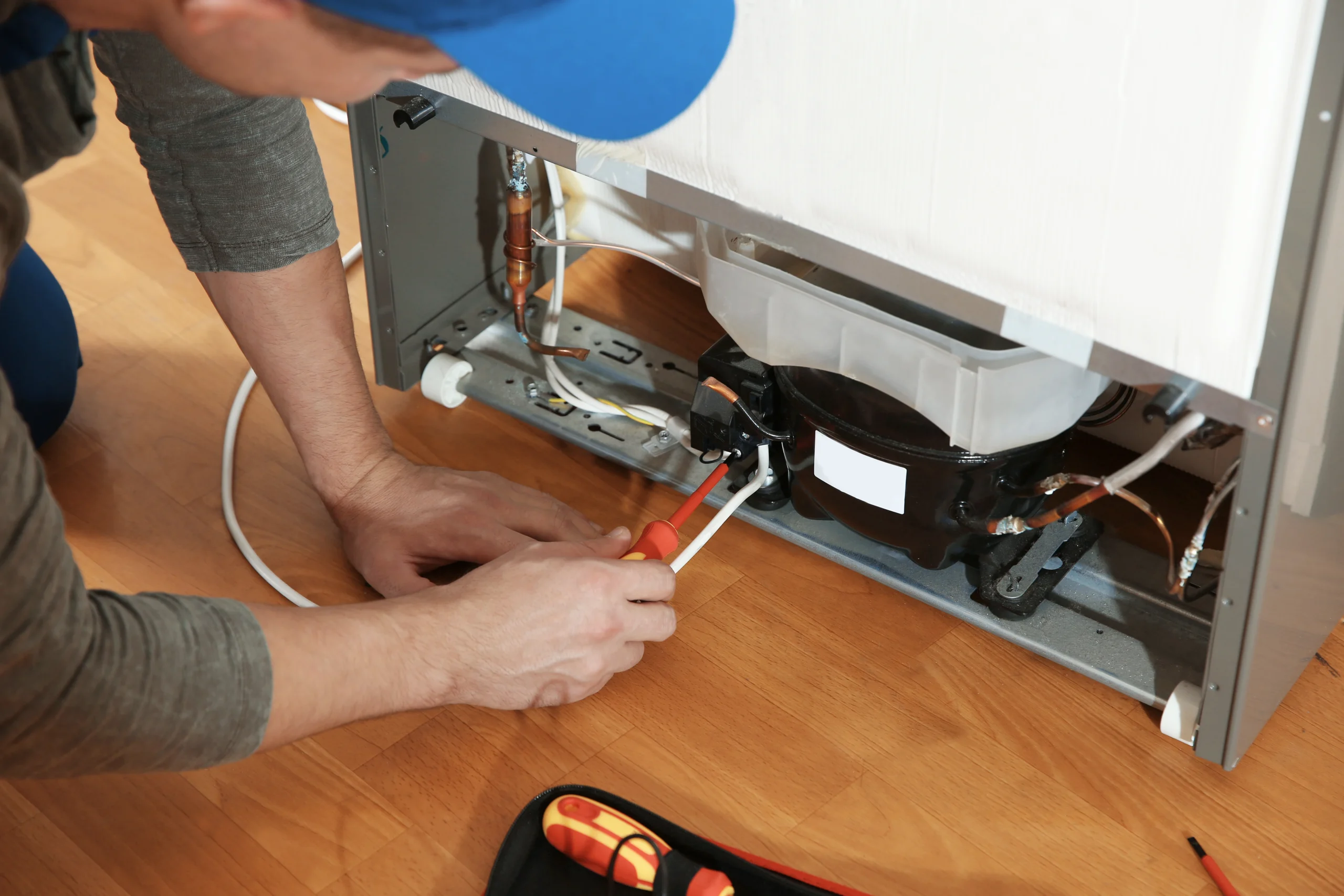
Understanding How Your Refrigerator Distributes Cold Air
To understand why your refrigerator is failing to cool while your freezer operates normally, it helps to understand a basic principle of appliance engineering: most residential refrigerators have only one cooling system (evaporator coil) located inside the freezer compartment.
Unlike commercial refrigeration setups that maintain completely separate cooling loops for every cabinet, standard home refrigerators generate 100% of their cooling capacity inside the freezer section. A motorized fan (the evaporator fan) draws air across super-cooled evaporator coils submerged in refrigerant. Once that air reaches sub-zero temperatures, a portion stays inside the freezer while a mechanical duct (the damper assembly) routes cold air upward into the fresh food compartment to maintain a constant 37°F to 40°F environment.
If anything restricts this continuous loop of cold airflow, blocks the return air vents, or disrupts temperature sensor signals, cold air remains trapped inside the freezer while the main food compartment slowly warms up. Below are the 5 primary mechanical failures responsible for this symptom.
5 Primary Causes of Warm Refrigerator with a Cold Freezer
1. Heavy Frost Accumulation & Defrost System Failure
By far the most prevalent culprit behind a cold freezer and warm refrigerator is a failed automatic defrost system. Modern frost-free refrigerators periodically activate a heating element wrapped around the evaporator coils to melt away natural ice and frost accumulation. This defrost cycle occurs every 8 to 12 hours, managed by three key components: a defrost heater, a defrost thermostat (bimetal switch), and a defrost control board or timer.
If any of these three components fail:
- Frost continuously accumulates over the evaporator coils inside the freezer wall.
- Within 48 to 72 hours, a solid block of ice encases the cooling fins.
- The ice barrier completely blocks air passages leading into the refrigerator section.
- Because air cannot circulate, the fresh food compartment heats up, even though the freezer coils themselves are freezing cold.
Common Sign: You may notice thick frost buildup on the back wall of your freezer compartment or hear the evaporator fan blade squealing as it ticks against encroaching ice.
2. Faulty or Noise-Emitting Evaporator Fan Motor
Even if evaporator coils remain free of ice, cold air cannot travel into your refrigerator section without a functioning evaporator fan motor. Located directly behind the freezer panel, this fan actively pulls cold air over the coils and forces it through ductwork into the main food cabinet.
Evaporator fan motors can fail electronically (burnt motor windings) or mechanically (worn bearings). When the fan motor stops spinning:
- Cold air stays stagnant inside the bottom of the freezer.
- Zero air movement reaches the fresh food compartment vents.
- The compressor will run constantly in a futile attempt to reach set temperatures.
Diagnostic Test: Open your freezer door and manually depress the door switch button. If you do not hear the soft hum of fan blades spinning or feel cool air blowing from the freezer vents, the fan motor or its power harness is defective.
3. Stuck or Broken Air Damper Control Assembly
The air damper is a small motorized door located inside the air channel between your freezer and fresh food section. Guided by signals from the main control board, the damper opens to let cold air flow into the refrigerator when temperatures rise above 38°F and closes once target temperatures are satisfied.
If the small plastic gears inside the damper motor break or if the door becomes jammed shut with ice:
- The damper remains permanently closed.
- No cold air can pass from the freezer into the fresh food section.
- The freezer maintains perfect freezing temperatures, but the main cabinet climbs to room temperature.
4. Heavily Clogged Condenser Coils & Overheated Compressor
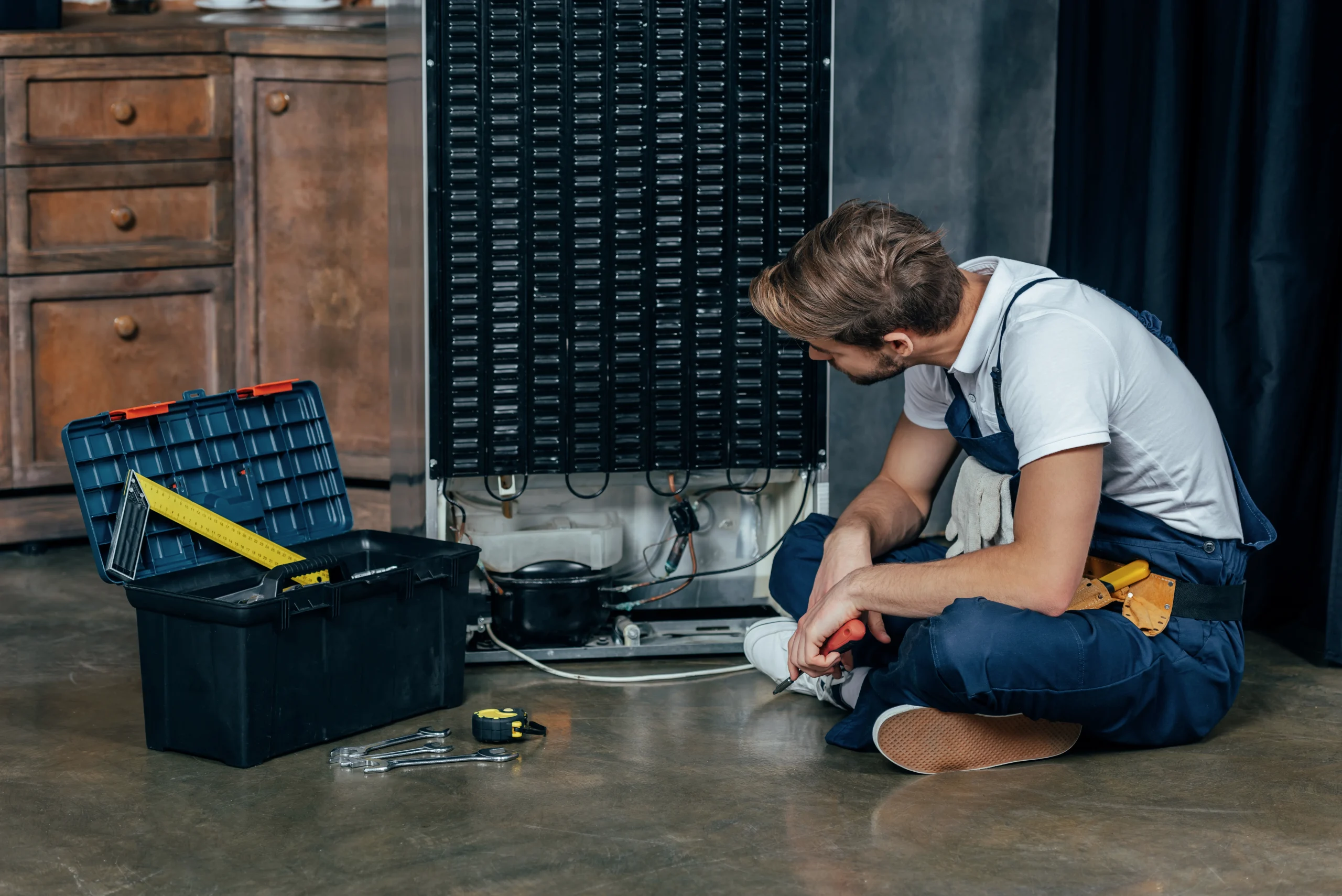
Located at the bottom exterior or back of your refrigerator, condenser coils dissipate heat drawn out from inside the appliance. In homes across Amarillo, dusty Panhandle winds, pet hair, and household lint naturally build up on these external coils over time.
When condenser coils become insulated in a thick coat of dust, the compressor must work twice as hard to reject heat. As heat builds up, system efficiency drops drastically. The compressor may manage enough cooling capacity to keep the small freezer cold, but lacks the cooling headroom necessary to keep the larger fresh food compartment chilled.
5. Defective Thermistor (Temperature Sensor) or Main Control Board
Modern electronic refrigerators rely on thermistors—solid-state sensors that measure cabinet temperatures and report resistance changes to the main logic board. If the fresh food thermistor fails and incorrectly reports to the control board that the main compartment is already at 37°F:
- The control board will not open the air damper door.
- The fan will not increase airflow to the fresh food cabinet.
- Your food spoils despite the cooling system being physically healthy.
Quick Diagnostic Summary Matrix
| Symptom Observed | Most Likely Defective Component | Recommended Action |
|---|---|---|
| Frost/Ice thick on freezer rear wall | Defrost Heater / Bimetal Thermostat | Manual 24-hr defrost & component testing |
| No fan sound when door switch pressed | Evaporator Fan Motor | Check voltage & replace fan motor |
| Freezer sub-zero, zero airflow in fridge vent | Motorized Air Damper Door | Inspect damper door linkage & housing |
| Compressor runs 24/7, back coils dusty | Dirty Condenser Coils | Vacuum & brush condenser coils thoroughly |
Step-by-Step Homeowner Troubleshooting Actions
Before calling for professional refrigerator repair in Amarillo, perform these four immediate checks:
- Check Food Placement and Vents: Ensure tall items or bulky boxes in your freezer or refrigerator are not physically blocking air return louvers.
- Clean the Condenser Coils: Unplug the refrigerator and use a coil brush attachment on your vacuum to remove dust build-up from beneath or behind the unit.
- Verify Temperature Controls: Ensure your digital thermostat hasn’t accidentally been bumped to an improper setting (recommended: 37°F for fridge, 0°F for freezer).
- Perform a Complete 24-Hour Manual Defrost: Unplug the appliance, store perishable items in ice coolers, leave both cabinet doors open for 24 hours, and place towels at the base to catch meltwater. If cooling resumes normally for 3 to 4 days after plugging it back in before warming up again, your automatic defrost system has failed and requires component replacement.
When to Call a Professional Technician in Amarillo, TX
While clearing blocked air vents or cleaning condenser coils is easy for homeowners, diagnosing failed defrost heaters, testing thermistor resistance with a multimeter, or replacing motorized dampers requires specialized tools and technical expertise.
Operating a refrigerator with a defective defrost system or failed fan motor forces your compressor to run continuously without resting, drastically shortening its operational life and raising monthly electricity bills. If a 24-hour manual defrost does not permanently solve your cooling issue, contact our certified team at Appliance Repair Amarillo TX. We provide fast same-day diagnostics, genuine OEM replacement parts, and a full 90-day warranty on all repairs across Amarillo, Canyon, and Bushland.